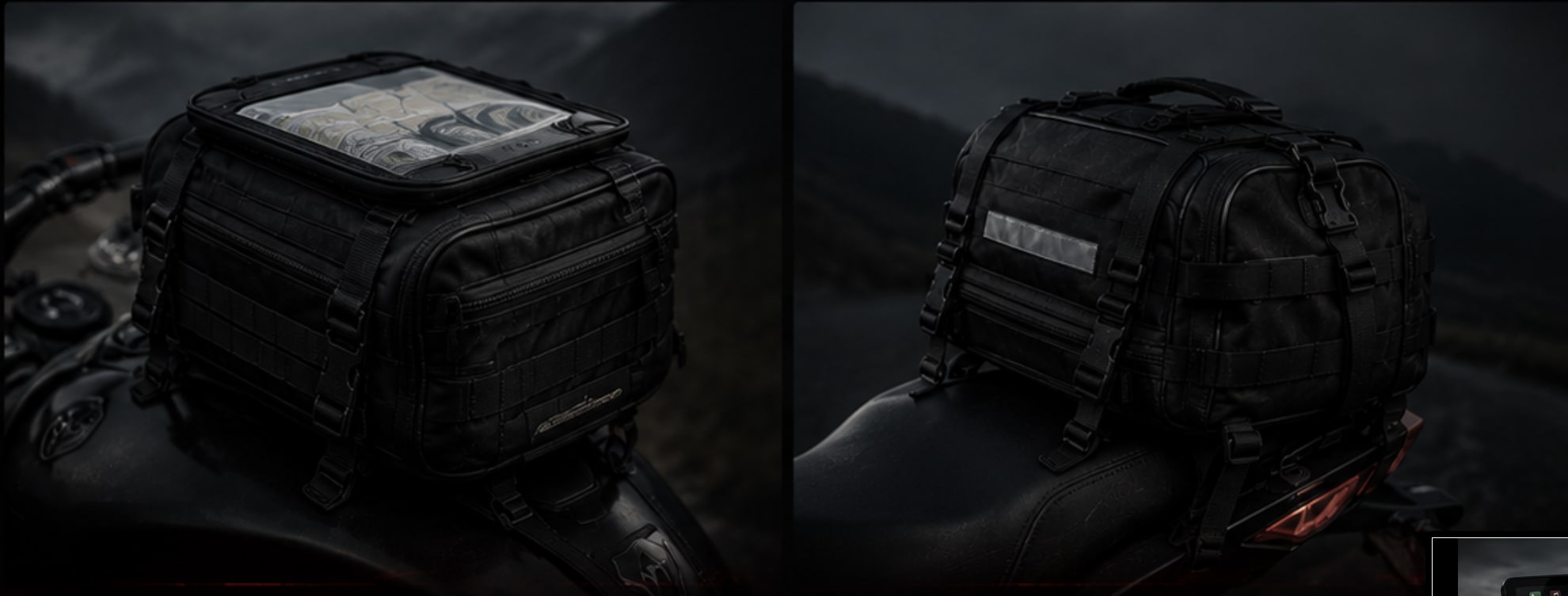
The Two-Bag Setup
For daily riding, I usually only carry the essentials — wallet, basic tools, chargers, and maybe an extra layer. The tank bag handles those easily without affecting the bike’s balance or changing the clean look of the MT-03. The tail bag only comes into play during longer touring rides, where the additional storage and better weight distribution become much more important.
During my Thailand trip, running both bags together provided enough storage for about a week’s worth of gear while still keeping the bike compact and manoeuvrable. I still kept my top box for convenience, but shifting heavier touring items into the tail bag made the bike feel noticeably better balanced, especially through corners and at highway speeds.
Tank Bag
Tail Bag — Touring Setup
Why I Added a Tail Bag
I still use a top box daily because, honestly, the convenience is hard to beat. Once you get used to the extra storage, especially for commuting and errands, it becomes part of the bike. That said, top boxes do add some weight high and towards the rear, which slightly changes the handling and the clean rear profile of the MT-03.
For touring, though, storage never really feels enough — especially on longer rides from Singapore to Thailand. Instead of replacing the top box, I added a tail bag for extra flexible storage. It gives additional carrying capacity for longer trips without needing a larger permanent setup, and the soft bag can compress down nicely when not fully packed.
Where to Buy
// Shopping Links
Field Notes: Tank Bag & Tail Bag
Classification: Soft Luggage // Daily Riding + Long-Distance Touring Setup
[TAIL BAG SECURITY] A properly tightened multi-point strap setup is extremely secure for touring use. After the first 50km or so, stop and recheck the strap tension, as the load usually settles slightly once riding begins. Even a small amount of movement at highway speeds can affect the rear feel of the bike, so taking a minute each morning to inspect the setup is well worth it.
[RAIN PROTECTION] Most soft bags are only water-resistant unless fitted with a proper rain cover. During my Thailand ride, afternoon rainstorms were common, especially around the Chiang Rai region. Once dark clouds start building, install the rain cover early instead of waiting for the first drops. Waterproof packing cubes or dry bags inside also help protect electronics, clothing, and important documents.
[TANK BAG & FUELLING] Magnetic tank bags need to be removed before refuelling, so it helps to make it part of your routine at every petrol stop. Remove, refuel, then remount before moving off. Forgetting even once can leave the bottom of the bag smelling strongly of petrol. Strap-mounted tank bags are more convenient in this area since they can usually stay in place during fuelling.
[THAILAND LOAD-OUT] During the Thailand tour, the tail bag was packed close to full capacity, carrying roughly 35–40L worth of gear. It comfortably held clothing, rain gear, spare gloves, basic tools, and overnight essentials, while the tank bag handled smaller daily-access items such as documents, a power bank, and snacks. Together with my daily-use top box setup, the bike still remained comfortable and manageable throughout the trip without needing panniers or a larger touring configuration.
Final Assessment
- Tank Bag Rating: 8/10 — practical for daily riding with easy access to essentials
- Tail Bag Rating: 9/10 — excellent additional storage for touring without permanent bike modifications
- Combined Setup: Provides enough capacity for extended touring while keeping the bike relatively compact and manageable
- Recommended For: Riders who want flexible touring storage while still maintaining a clean daily riding setup