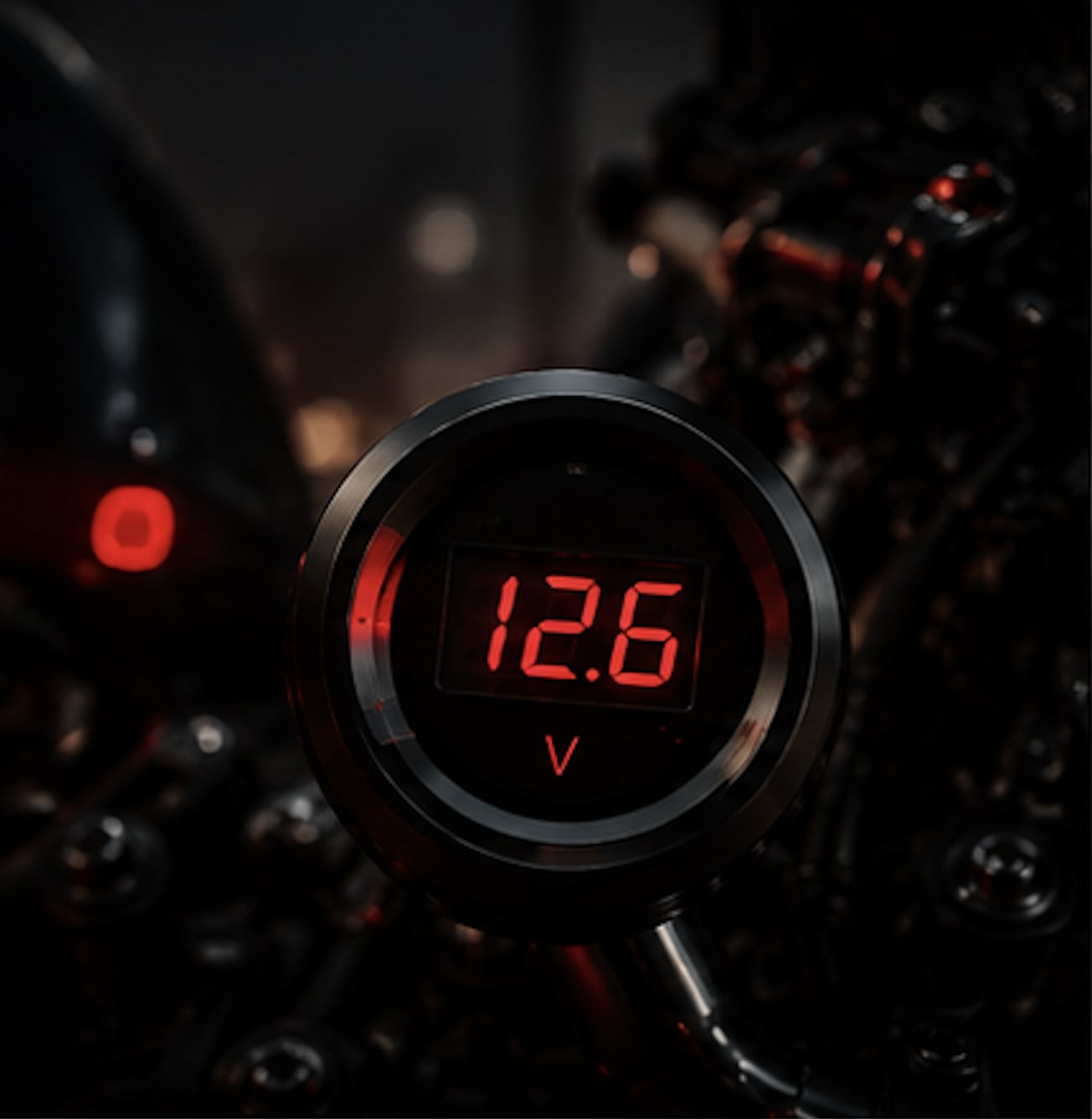
Why You Need One
A weak or failing battery is one of the most common reasons a bike doesn't start. A volt meter gives you a real-time readout of your battery voltage — so you can catch issues before they leave you stranded. At idle, you should see around 12.5–13V. With engine running and charging, expect 13.5–14.5V. Anything outside that range, you know to investigate.
Installation Steps
Where to Buy
// Shopping Links
Parts Required
// Bill of Materials
- Mini waterproof 12V volt meter display (LED, 3-wire)
- 2x ring terminals or spade connectors
- Short lengths of 18AWG wire (red and black)
- Heat shrink tubing
- Double-sided mounting tape or bracket
Real World Notes
Total cost: Under $5. Total install time: 30–45 minutes. This mod has saved me from an unexpected dead battery more than once. You can see at a glance if your stator is charging correctly, if your battery is dropping at idle, or if something is drawing too much current.
Small mod. Big peace of mind.
Detailed Field Notes: Volt Meter
Mod Classification: Electrical / Diagnostics
[CALIBRATION] Most cheap volt meters are accurate to within ±0.1V. Good enough for a bike. Cross-reference against a known-good multimeter when first installed to confirm accuracy.
[READINGS GUIDE] 12.0–12.5V (engine off) = battery healthy at rest. Below 12.0V at rest = battery struggling. 13.5–14.5V (engine running) = charging system healthy. Below 13V while running = stator or regulator issue.
[WEATHERPROOFING] Make sure your meter is rated IP65 or better if it's exposed to rain. Wrap all connections in self-amalgamating tape for long-term reliability.
Final Assessment
- Difficulty: 1/5 — Easiest mod on the list
- Time Required: ~45 minutes
- Would Recommend: 100% — everyone should have one