The Problem I Learned the Hard Way
On the Thailand tour, my iPhone went from 100% to 20% in a single riding day. Heat, active GPS, camera use, constant screen-on. I had a power bank. It didn't help. The physics are simple: under full GPS and screen load in Southeast Asian heat, a phone drains faster than a standard power bank can top it up.
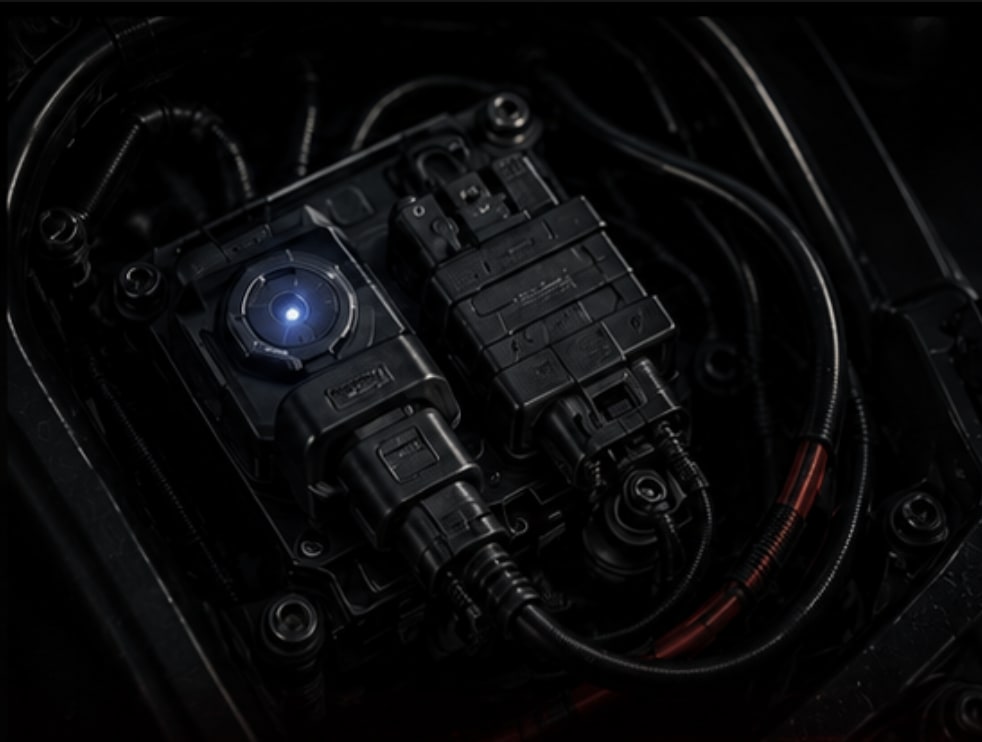
The only real fix is power drawn directly from the alternator — a hardwired USB or wireless charging port that runs while the engine runs. Charge rate matches or exceeds drain. Problem solved permanently.
What to Look For
Wireless vs Wired
If budget allows, go wireless. A Qi wireless charger integrated into your RAM mount means zero cables. You dock the phone, it charges. No connector to wear out from 12 hours of vibration, no cable to snap in the wind at 110km/h.
If going wired, use a coiled cable. A long straight cable flapping at speed will eventually snap the Lightning or USB-C connector on your phone. This is not a theory — it happened to me on the return leg from Hatyai.
Where to Buy
// Shopping Links
Field Notes: Charging System
Classification: Electrical / Power Management // Day 1 Install
[WIRING PROTOCOL] Always tap into an ignition-switched circuit through your auxiliary fuse box. This gives you clean, protected, independent power that automatically cuts when you turn the key off. Wiring directly to battery positive without a switched circuit means your charger runs overnight and can drain your battery by morning.
[FUSE SIZING] A QC3.0 USB charger draws around 2–3A. A wireless 15W charger draws around 1.5A. Fuse at 5A per circuit — gives headroom without being undersized. If you're running a charger and a dashcam on the same circuit, fuse at 10A and use heavier gauge wire.
[THAILAND LESSON] My phone hit 85°C surface temperature on a clear day in Chiang Mai with the screen on for navigation. At that temperature, iOS throttles charging to protect the battery. Keeping the phone off the fairing surface and in a vented mount dropped surface temps by roughly 15 degrees. Noticeable charge rate improvement.
[CAMERA DRAIN] If you're also running an action camera and a dashcam, budget your fuse box circuits carefully. Three devices running simultaneously can easily pull 8–10A. Plan your wiring before you install anything, not after.
Final Assessment
- Rating: 9/10 — essential, loses a point only because install requires planning
- Cost: Low — quality wireless unit from $20–40 SGD
- Would Do Again: This is now installed before anything else on a new bike
- Recommended For: Every rider — commuter or tourer, no exceptions