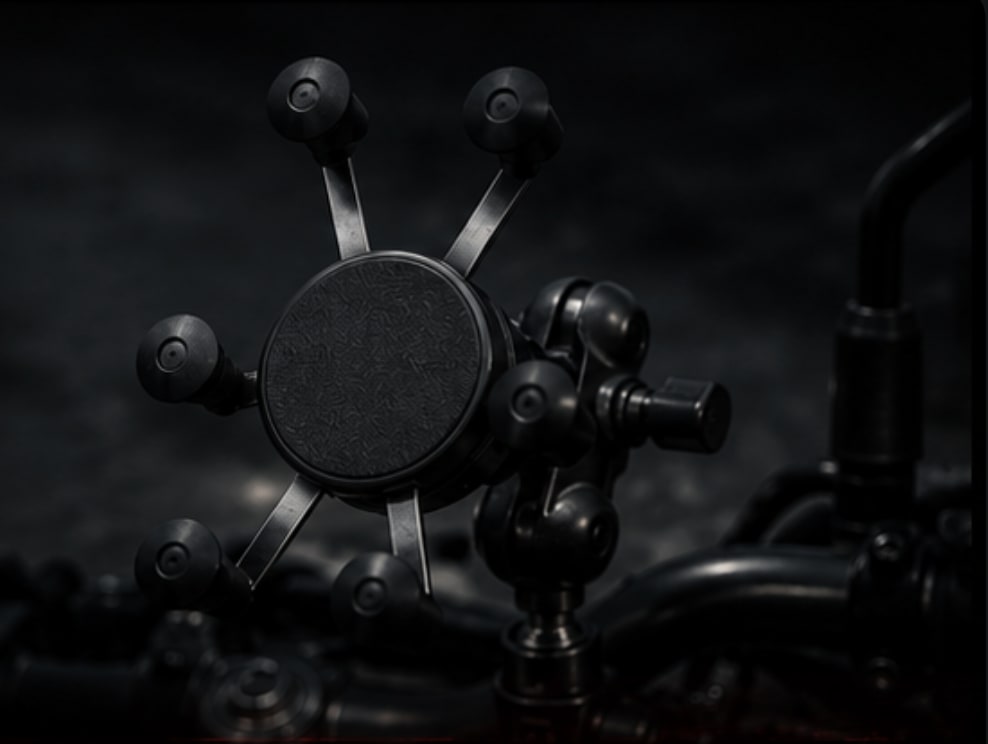
Why RAM & MWUPP and Not the Cheaper Options
There are hundreds of handlebar mounts on Shopee and Lazada. Most of them look identical to RAM Mounts & MWUPP. Most of them are not. The difference isn't cosmetic — it's in the alloy spec, the wall thickness of the ball socket, and the vibration tolerance over thousands of kilometres.
A knockoff mount works fine in the carpark. It starts failing on a long tour when micro-cracks develop in the socket from sustained vibration. At 110km/h on the NSH, a GPS sliding off the handlebar is not an inconvenience — it's a serious safety event. Buy genuine RAM or MWUPP once. You will not replace it.
System Breakdown
Less Is More — The Lesson From Thailand
On the Thailand run, I put up extra mount points for the Insta360. Didn't use a single one. Handlebar footage from a motorcycle looks like a washing machine spin cycle — engine vibration ruins everything below 60fps stabilisation. Helmet mount and chest mount give clean footage. Bar mount gives vibration art.
Every extra mount on your handlebar is another thing to check, tighten, and potentially lose. The bar should be clean. GPS left, phone right, nothing else.
Where to Buy
// Shopping Links
Field Notes: RAM Mount System
Classification: Hardware / Mounting Infrastructure // Permanent Install
[KNOCKOFF IDENTIFICATION] Genuine RAM has crisp machining marks on the ball and socket, consistent anodising colour, and a firm-but-smooth rotation feel. Knockoffs feel gritty when you rotate the ball — that's the soft alloy starting to wear from day one. Weight is also a tell: genuine RAM is noticeably heavier for the same component size.
[BAR POSITION LOGIC] GPS goes left of centre — you glance left to check your route, same direction as your mirrors. Phone goes right side, slightly lower. Splitting attention evenly means no sustained head-turn in one direction while riding. Small ergonomic detail that matters over a 10-hour day.
[ACTION CAMERA NOTE] If you want bar-mounted action footage, use a RAM short arm with a camera-specific head and set expectations appropriately. The MT-03 engine vibration at 6,000–8,000 RPM produces a frequency that shows up in footage as a micro-judder. EIS on modern cameras handles it at low speed, less so at highway cruise. Helmet mount remains the gold standard for usable touring footage.
[MAINTENANCE] RAM mounts need essentially zero maintenance beyond the pre-ride torque check. Clean the ball socket annually with a dry cloth. Do not lubricate — the friction between ball and socket is intentional. Oil or grease will cause the mount to slip under vibration.
Final Assessment
- Rating: 9/10 — only downside is cost vs the knockoff temptation
- Longevity: Years with zero maintenance beyond torque checks
- Would Buy Again: Already have — same system across multiple bikes
- Recommended For: Anyone mounting a GPS or phone to a handlebar — full stop